Luminary Towers and Life Trees
Regional anchors and rescue targets — cleanse corruption to open travel and weaken enemy camps.
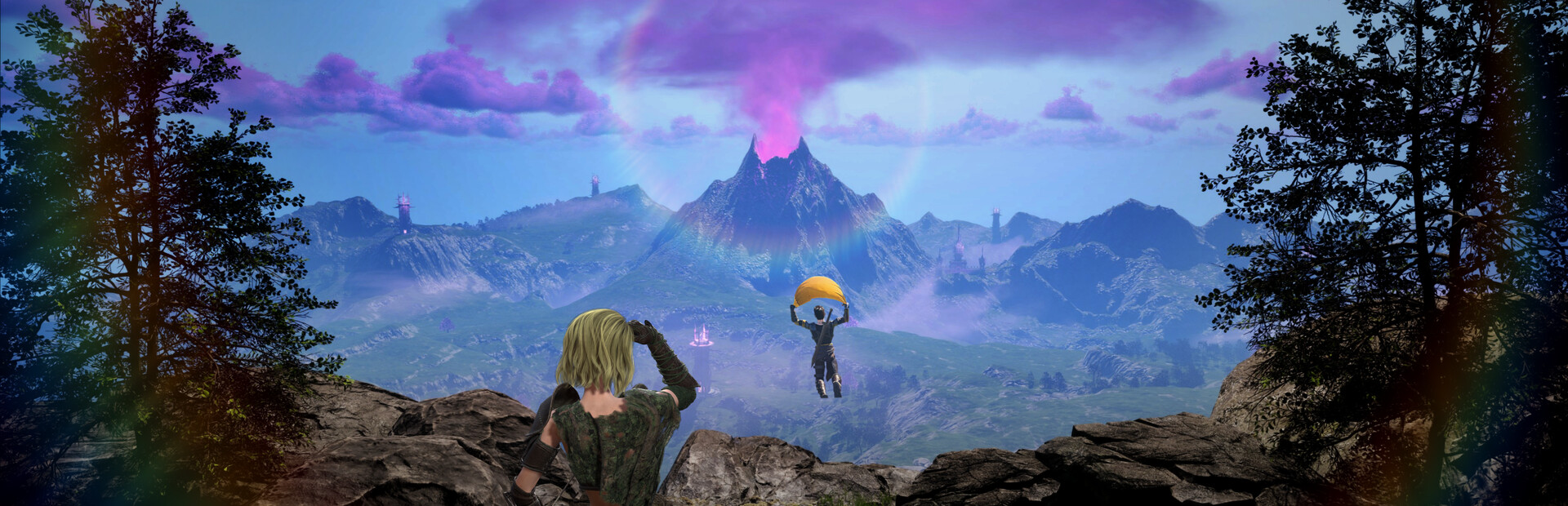
Two landmark types structure Luminary’s OpenZone progression: corrupted Towers and endangered Life Trees. Towers act as regional anchors — while active, they amplify nearby enemy camps, block shortcuts, and fog map segments until liberated. Life Trees sit in the same compass neighborhoods; rescuing them reduces ambient corruption debuffs and often softens the path toward the local Tower. Refractive Entertainment ties map flow to these objects more tightly than scattered quest turn-ins. Steam Early Access on August 11, 2026 at $19.99 includes both systems across roughly half the two-kilometer-square world on day one.
Combat-heavy Tower phase walkthroughs also live in Liberate Towers — this map guide emphasizes geography, order, and regional effects. Pair with Camps and Treasures because satellite camps buff Towers until destroyed.
What corrupted Towers do
An active Tower projects a corruption zone. Inside that zone:
- Enemy camps respawn faster and elites patrol wider paths.
- Fast travel nodes stay offline until liberation completes.
- Ambient damage or stat debuffs may tick depending on regional modifiers.
- Map fog persists longer than in cleansed areas.
Liberating a Tower:
- Opens travel routes through the region.
- Weakens linked camps so they stay down longer.
- Unlocks vendor recipes or story beats tied to that compass direction at Vendors and Crafting.
- Advances overall completion toward endgame Tier access in Hall of Heroes and Endgame.
Tower silhouettes are visible from distance — use them for navigation per World Overview.
What Life Trees do
Life Trees represent corrupted nature pockets. While suffering:
- Regional debuffs stack with Tower corruption — healing reduction, stamina drain, or elemental vulnerability depending on zone.
- Optional NPC or resource nodes may stay locked.
- Visual storytelling marks where primal magic surged off-balance.
Rescuing a Life Tree:
- Removes or reduces its debuff aura.
- Often unlocks gathering shortcuts — fishing spots, mining ledges, critter paths from Town Hub guides.
- Signals readiness for Tower attempt when combined with camp clears.
Life Tree pulses appear on map UI — prioritize rescue before Tower interior if debuffs cause wipe loops.
Recommended regional order
Flexible OpenZone design allows non-linear paths, but this order minimizes frustration on day-one half map:
- Scout Tower and Life Tree pair — mark satellite camps from Camps and Treasures.
- Clear outer camps — reduce Tower buff layers.
- Rescue Life Tree — drop ambient debuffs.
- Upgrade at hub — Blacksmith plus Chef meal from Fishing stock.
- Liberate Tower — interior phases in Liberate Towers.
- Revisit mining and fishing — safer routes post-liberation.
Skipping camp clears creates gear-check Tower cores — the most reported Early Access frustration in community feedback before launch.
Tower interior structure (geography view)
Interiors vary by region but repeat structural beats:
- Entry gauntlet trash packs.
- Shield segment tied to external ritual points or mini-elites.
- Core guardian with break bar mechanics from Combat Basics.
- Central channel interaction locking liberation.
Vertical layout uses climbing and gliding from Locomotion Controls — scout balcony Bow lines per Ranged Build before committing the party.
Co-op considerations
Three-player online drop-in/drop-out co-op simplifies add phases and channel interactions — one player channels liberation while others hold adds. Roles from Roles and Party Tips:
| Role | Weapon lean | Map job |
|---|---|---|
| Anchor | Sword and Shield | Hold choke aggro |
| Breaker | Magic Glove | Strip shields, interrupt casts |
| Sniper | Bow | Tag camps from elevation pre-pull |
Hosts should announce which Tower region is active so drop-in guests do not pull unrelated overworld elites.
Towers, Life Trees, and endgame Tiers
After the campaign end boss, Tier difficulty remixed familiar Towers and Life Tree zones into farming content — higher enemy stats, better loot tables, same geography. Map knowledge from week one remains valuable at Tier 3. Read Hall of Heroes and Endgame before pushing Tiers without refreshed Armorer slots.
Demo exposure versus Early Access
Very Positive demo may expose Tower exteriors or partial sequences without full liberation payoff. Early Access completes chains and ties them to half-map unlocks. Demo Review compares scope; Demo Walkthrough orders demo objectives.
Common mistakes
- Tower pull before Life Tree rescue when debuffs cause sustain failure.
- Ignoring satellite camps — buffed cores wipe prepared groups.
- Solo glass-cannon Bow rush on first liberation — Sword and Shield stabilizes learning runs.
- Forgetting hub vendor pass after liberation — new recipes often appear immediately.
Report bugged barrier interactions on Steam; coordinate co-op liberations in discord.gg/NNrurAT5um. Return to Map Hub for camp and treasure routing after each regional cleanse.
Frequently Asked Questions
Quick answers to the most common Luminary questions.
Should I rescue Life Trees before liberating Towers?
Usually yes. Life Tree debuffs stack with Tower corruption; rescuing trees first reduces wipe risk on the spire attempt.
What happens when I liberate a Tower?
Travel routes open, linked camps weaken, vendor recipes may unlock, and map fog clears further in that region.
Do Towers block fast travel?
Active Towers typically keep regional fast travel nodes offline until you complete the liberation sequence.
How many Towers are on the day-one map?
Early Access ships roughly half the final map — fewer Towers than 1.0 but the same rules per region. World Overview tracks scope.
Can I liberate Towers solo?
Yes. Co-op simplifies add phases, but solo Sword and Shield play remains viable with proper Chef meals and camp clears.